

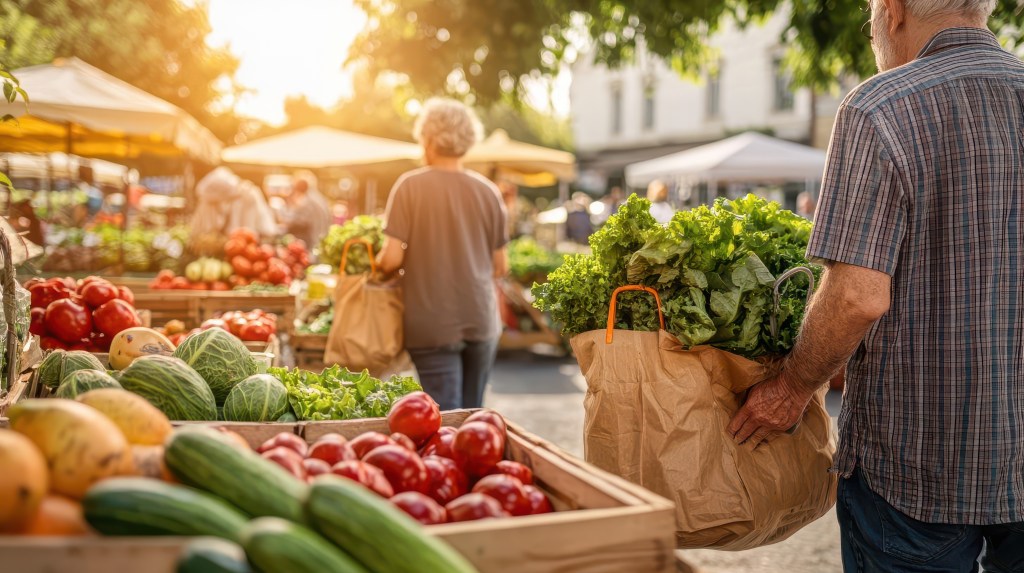
Organic local farmers and public health professionals share a lack of appreciation and recognition for their impact on a community’s health. Indeed, promoting healthier diets and practices and growing healthy food are perceived as unglamorous. However, their effects are physically, mentally, and financially less painful than surgery, hospitalization, and recovery. Local Food System stakeholders and public health professionals deserve recognition for the real but invisible value they add to their communities. In fact, several school gardens or an acre farm will provide years of health education to hundreds of individuals at a fraction of the cost of a single major surgery.
How could a Local Food System be a public health tool?
Unlike the global food system, local Food Systems (LFS) produce food near where it is consumed. In the current global system, food travels an average of 1500 miles through an efficient but fragile, rigid, and complex distribution network, sadly illustrated during the recent COVID pandemic and conflicts.
While it is unlikely that LFS will replace the global food system soon, LFS have growing roles: they add community resilience, provide multiple tangible and intangible dividends, and significantly impact a community’s quality of life. Rome and Havana are two extreme examples, according to RUAF, an international urban farming research institute based in the Netherlands. Growing 200 acres of broccoli, a California farmer dependent on the global food system is inevitably disconnected from his harvest consumers by distance, harvest volume, and the many distribution intermediaries. In contrast, by growing a few rows of broccoli, among many other crops, many local farmers will likely have direct contact and a relationship with those eating their harvests.

Economic impact
LFS’s economic impact is substantial and more significant than manufacturing. Local labor is its main expense; few and minimal purchases of seeds and supplies are made outside the immediate community. LFS creates good direct and indirect local jobs in a new ecosystem, favoring an entrepreneurial mindset and recirculating revenues with a high economic multiplier impact.
Health and social impacts
Small local farms offer a wide variety of products whose freshness improves quality and nutrient density, enabling healthier diets and potentially reducing chronic diseases. Urban farms, homes, and community gardens foster physical activity and a therapeutic connection to nature and allow children an early acquisition of healthy microbiomes with lifelong immune system effects. Sharing the concept that “We are what we eat ATE” illustrates vividly that health is a personal, important choice and that “Healthy food is not grown on sick soil.” Therefore, know where it was grown and who grew it.
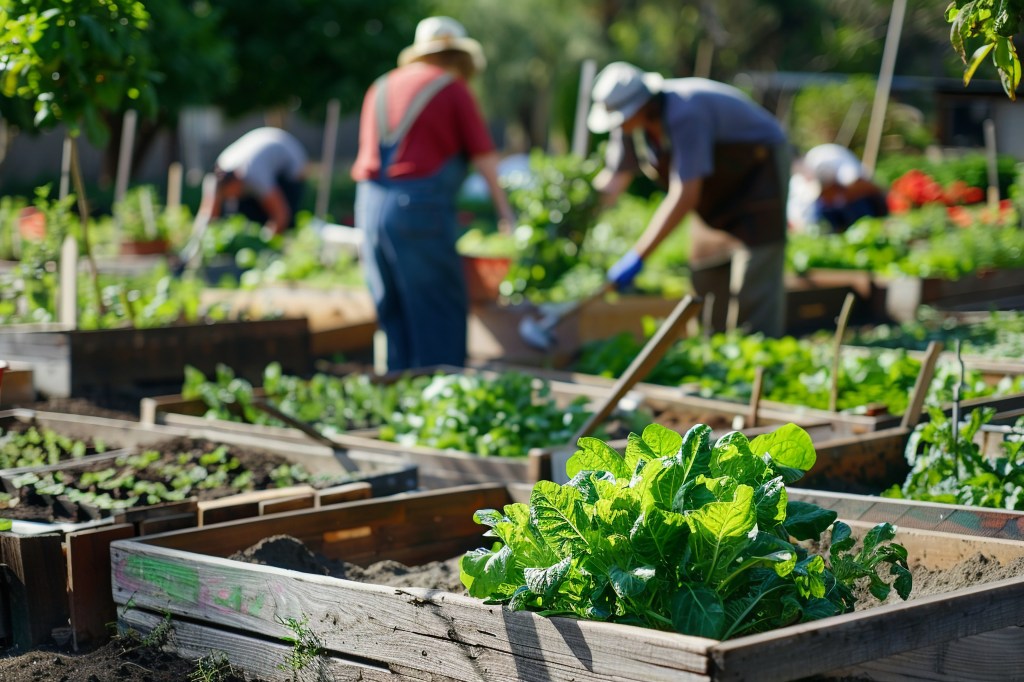
Socially, gardens and farms serve as a “third space,” a neutral ground that encourages grounding and social interaction. It’s a space where food and nature bring people together, fostering a sense of community and reducing social disparities. In this context, socioeconomic status, race, and other inequalities are set aside in favor of shared interests and enriching exchanges. In London, for example, through the National Health System, elderly residents who are often isolated are paired for garden activities with mentally challenged individuals. In Belgium, some retirement homes share a garden with a school to promote intergenerational exchanges. Those human interactions benefit both groups. Food and gardening are strong cultural and identity elements, creating valuable senses of place and purpose.
Educational impact
Farms, as well as community, home, and school gardens, are engaging outdoor science classrooms, encouraging experiential learning, teaching resilience, nurturing, and success by growing vegetables and flowers to share with family and neighbors. Adults reconnect with nature, discover where their food comes from, and expand their taste buds’ horizons by exploring new vegetable varieties, generating demand for freshness and a broader range of products from local farmers. Farms and gardens are an antidote and a counterpoint to the excesses of technology dependence.
Environmental impact
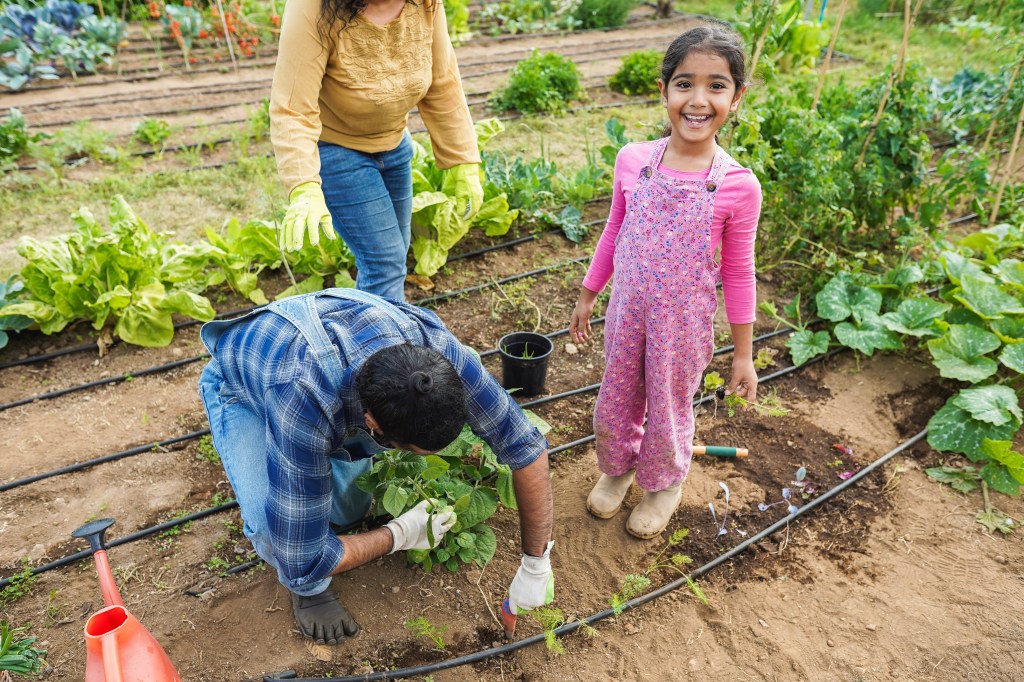
An LFS is a short food distribution circuit that reduces food miles and food and yard waste by creating a demand for compost. More green space and organic farming promote soil and water conservation, increase biodiversity and microorganism density, and minimize pesticide, herbicide, and fungicide residues on food. Farms and gardens offset heat islands in urban areas, store water, and reduce runoff.
In conclusion
Local Food Systems are a high-impact, low-hanging fruit in the quest for better public health and a healthier environment. They create stable jobs, improve public health through improved diets, and contribute to the mental health of more resilient and engaged residents. At the heart of this system is a growing collaboration between local farmers and public health professionals, working in the shadows to improve their community’s quality of life.
Continuous quality-of-life improvements depend primarily on recognizing the societal value of farmers and public health by fostering greater public awareness of their contributions, anchored on healthy soil as a basis for healthy plants and, therefore, healthy humans.
 The Microbiomes Revolution
Leave a comment